
P-01No real practice partner
Plenty of lessons, no one to actually talk to
Most learning apps lean on video lessons and drill questions. Learners understand a lot, but never build real conversation muscle.
/ Case Study · 2026.05
Built around how foreigners actually learn Mandarin, we combined LLM dialogue, AI Q&A, smart content generation and edge-inference hardware to rebuild the entire learning loop — listening, speaking, reading, writing and practice — so learners pick up Chinese the way they pick up a conversation.
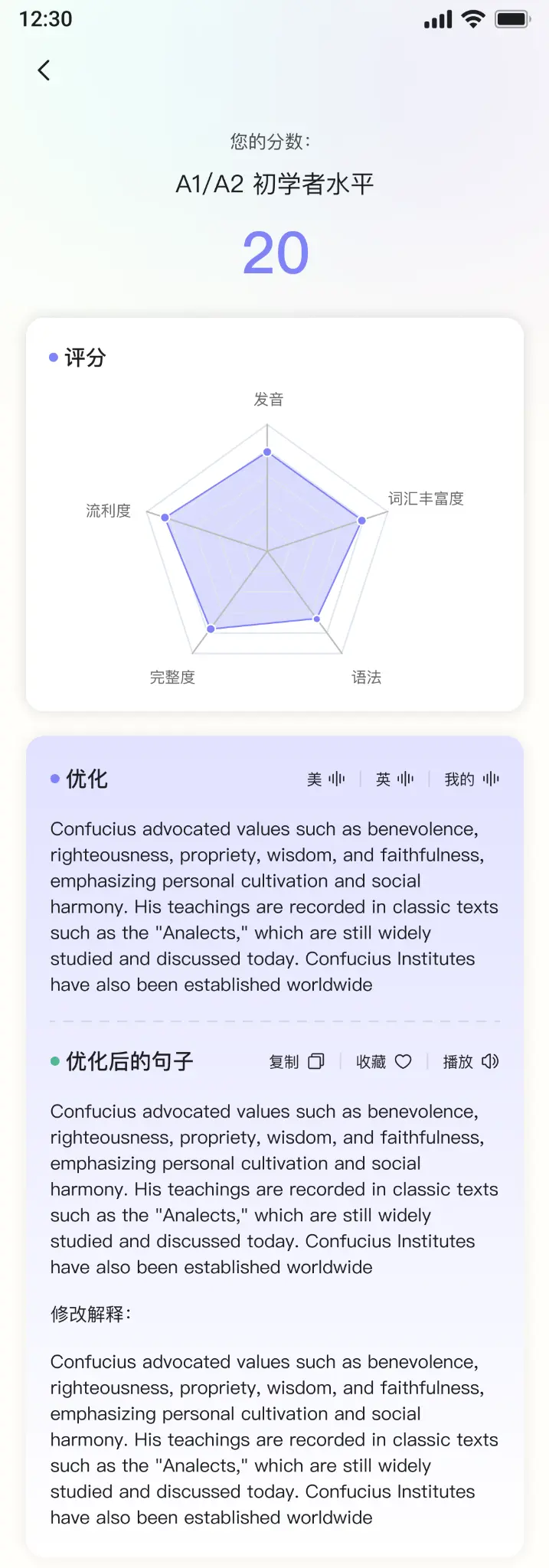
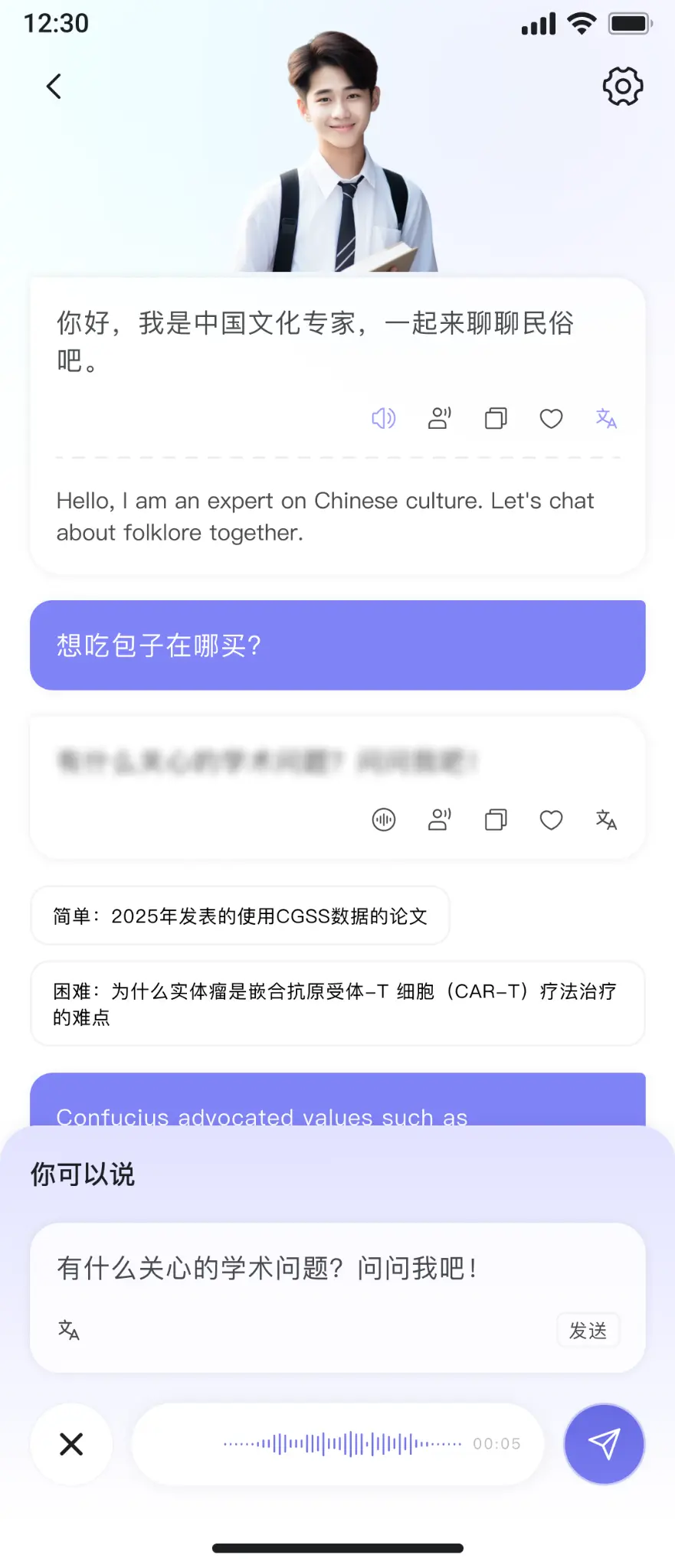
LLM Response
“Where can I get baozi around here?”
/ 00 · Overview
An LLM, NLP, ASR and edge-compute stack purpose-built for live Mandarin practice — adaptive to each learner, and stable across hardware and network conditions.
Updated · 2026.05
Edge inference and streaming I/O keep replies conversational.
One-click vocabulary cards and review slides.
English, French, Spanish, Arabic, Japanese and more.
Keeps working under weak network or fully offline.
/ 01 · The Problem
Our client wanted a Mandarin learning system for overseas markets. In our research, almost every existing product hit the same set of structural problems.
Most learning apps lean on video lessons and drill questions. Learners understand a lot, but never build real conversation muscle.
Learners from different countries and language backgrounds approach Mandarin in very different ways. A single fixed curriculum tanks completion and retention.
Why is it 了 here? What's the difference between 把 and 被? Most apps can't read context, let alone explain the underlying logic the way a teacher would.
Our client needed AI baked into their device. Traditional SaaS is slow, network-dependent and laggy on voice — the device experience falls apart.
/ 02 · Live Sample
We designed a full loop that chains AI dialogue, real-time correction, AI Q&A and content generation. Here's how the system handles an English speaker learning to order food in Mandarin.

User:I'd like one chicken rice, please.
AI:AI parses the speech and opens a Mandarin scenario dialogue.
User:Mispronunciation (tone error)
AI:AI flags the tone and corrects pronunciation in real time.
User:Why “一个” here?
AI:AI explains the measure-word logic in context, not just the rule.
User:Stuck on the ordering scenario
AI:Suggests related topics — paying, asking for directions — to extend the practice.
User:Session ends
AI:AI generates a review deck so the learner can revisit the key points.
/ 03 · How We Think
A lot of AI edtech ships with “AI but no learning system.” Early in the project we mapped three approaches and rebuilt the role AI plays in the loop.
VERDICT
Useful as a knowledge layer, but doesn't solve the conversation problem.
VERDICT
Great for high-value deep learning, but not viable for mass-market reach.
VERDICT
AI becomes an always-on language partner; pair it with curriculum and learning data to form a long-running loop.
/ 04 · How It Works
We didn't ship a chat window. We split the system into cooperating modules, each owning one part of the learning experience.
Real language scenarios, simulated
Learners talk to the AI in Mandarin — ordering food, asking directions, business conversations, casual chat, classroom interaction. NLP and ASR parse intent and produce context-aware replies in real time.
OUTPUT
Live Mandarin conversation practice
Explain the logic, not just the rule
Context-aware semantic reasoning. When the user asks “why doesn't 是 work here?” the AI explains the contextual difference, not just the rulebook.
OUTPUT
On-demand language explanations
AI adjusts the learning path
We adapt content from frequency, error patterns, pronunciation issues, interests and dialogue difficulty. When a learner plateaus on speaking, the system pushes more dialogue practice and trims reading.
OUTPUT
Personalized study plan
Lessons, structured automatically
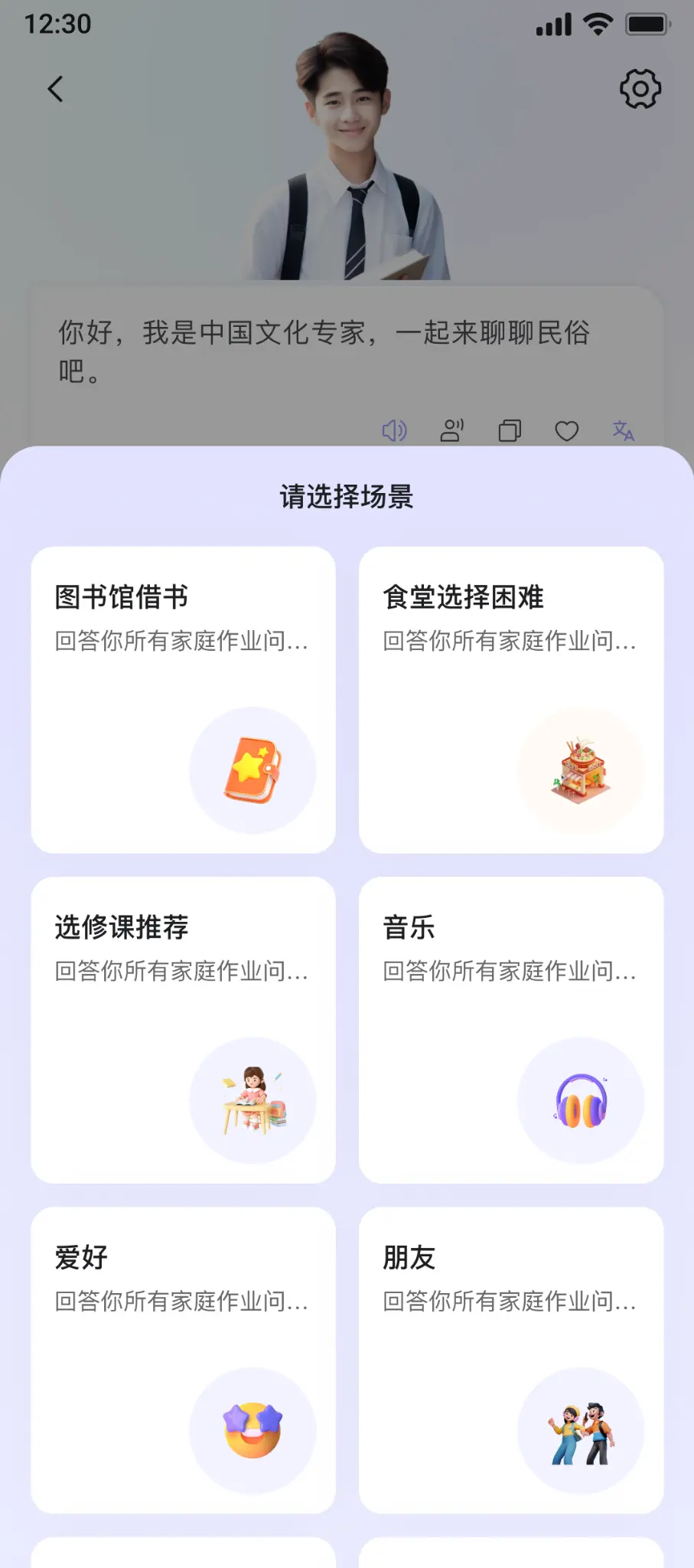
At the end of a session, the system aggregates vocabulary, grammar, dialogue and scenario notes, then renders a deck ready for the classroom or solo review.
OUTPUT
Automated study materials
Device-grade experience, not just cloud APIs
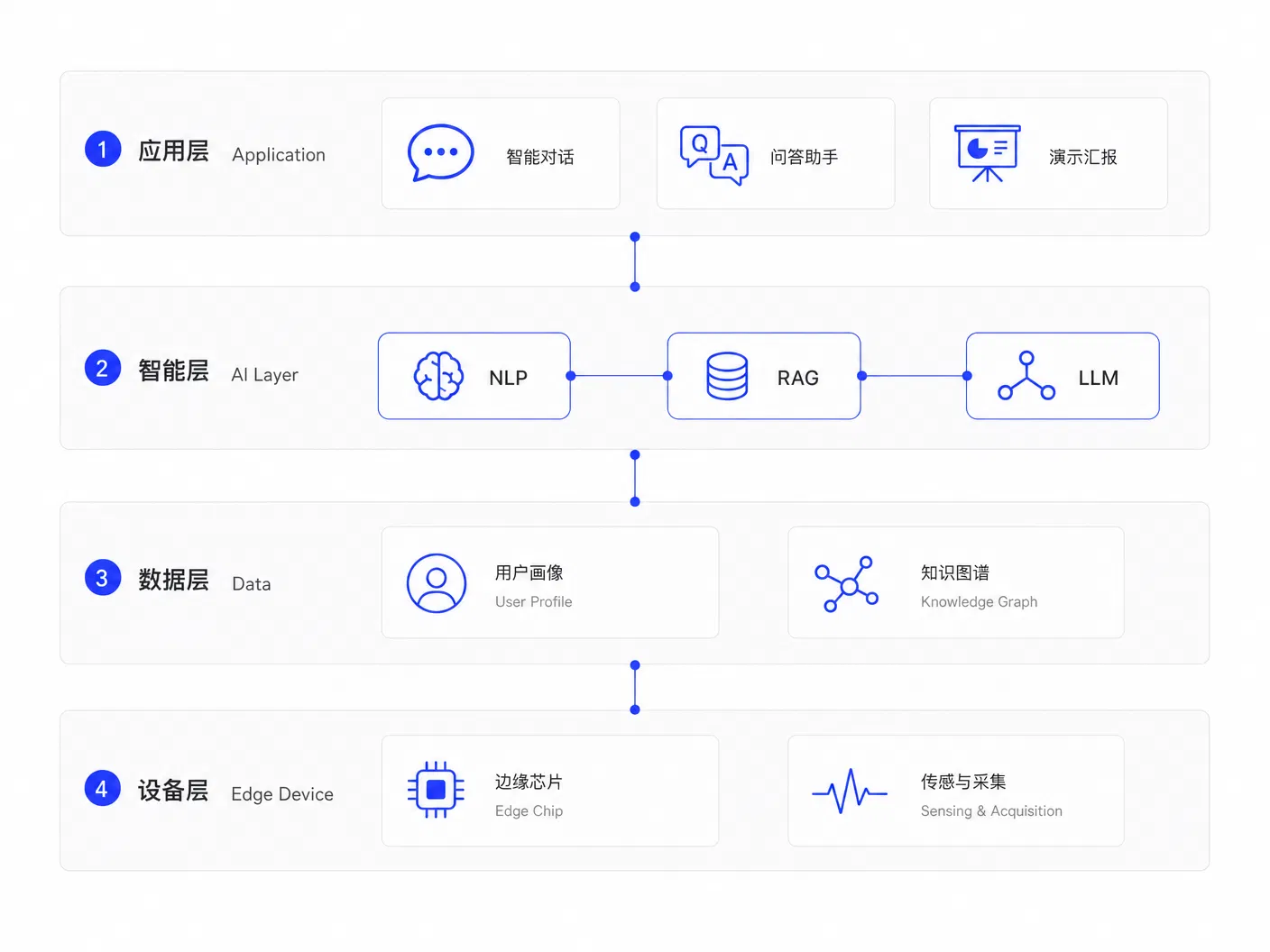
We push parts of the AI workload onto the device to cut latency. Local speech processing, real-time responses, weak-network fallback and tighter data control.
OUTPUT
Smoother, more stable device UX
App layer / AI layer / Data layer / Device layer — closing the full learning loop.
/ 05 · The Result
After launch, engagement rose sharply and the learning loop became noticeably more immersive — most visibly in expression, spoken interaction and self-directed practice.
| Dimension | Before | After | |
|---|---|---|---|
| Learning style | Passive lesson playback | Live AI interaction | |
| Engagement | Low | Markedly higher | |
| Feedback loop | Delayed | Real-time | |
| Learning path | Fixed curriculum | AI-adaptive | |
| Spoken Mandarin | Slow improvement | Reinforced by high-frequency practice | |
| Study materials | Manual aggregation | Auto-generated by AI |
Aggregated from 12 weeks of post-launch behavior (anonymized sample, trend comparison only).
“Our learners used to plateau in the “I can read it but can't say it” gap. Now the AI keeps the conversation going, corrects them and explains the grammar. The clearest signal is that session length and learning frequency went up across the board.”
— Client project lead
/ 06 · Technical Highlights
Local inference cuts response latency, keeps voice interaction conversational, and keeps working under weak network or fully offline conditions.
AI doesn't just answer questions — it participates in the conversation, recommends, corrects and generates content across the full loop.
Deep integration with the client's device: voice input, local processing, cloud sync and data protection keep the learning experience stable and continuous.
/ 07 · Where It Fits

Overseas Mandarin education
AI Mandarin practice partner
K-12 English learning
AI spoken English coach
Corporate training
AI learning assistant for employees
Vocational education
AI skills training system
Kids learning hardware
AI companion learning
International schools
Multilingual AI learning platform
/ 08 · Design Principles
You don't watch the language. You use it.
AI shows up across the whole loop, not just at the Q&A step.
The system adapts content from real learner behavior.
Real learning needs device, AI and interaction working in concert.
Related cases
Other projects delivered by Wavesteam — AI, IoT, platform builds and enterprise software.
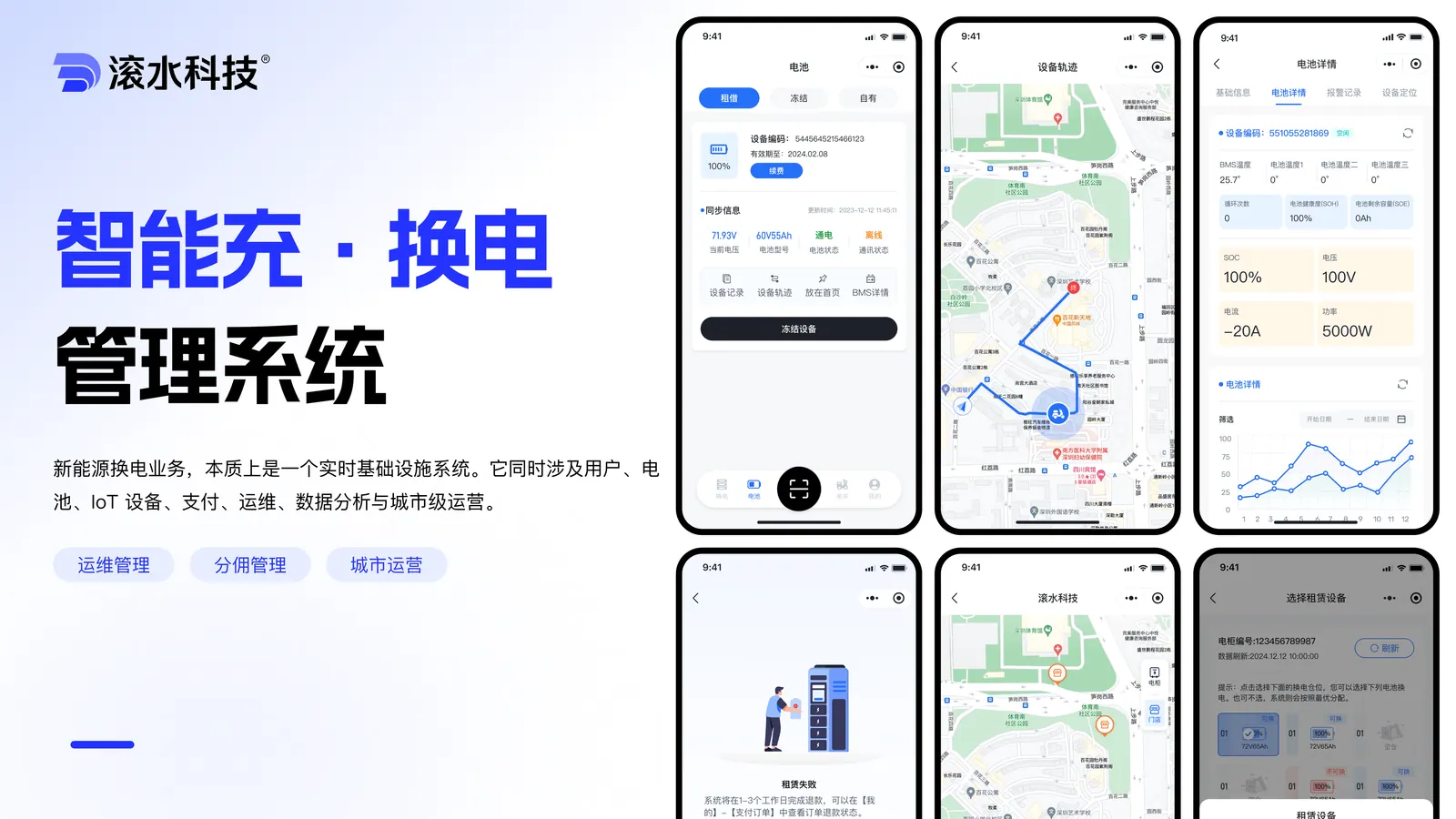
A new-energy charging and swap platform that spans the device network, driver journey and operations command center.
Read the case study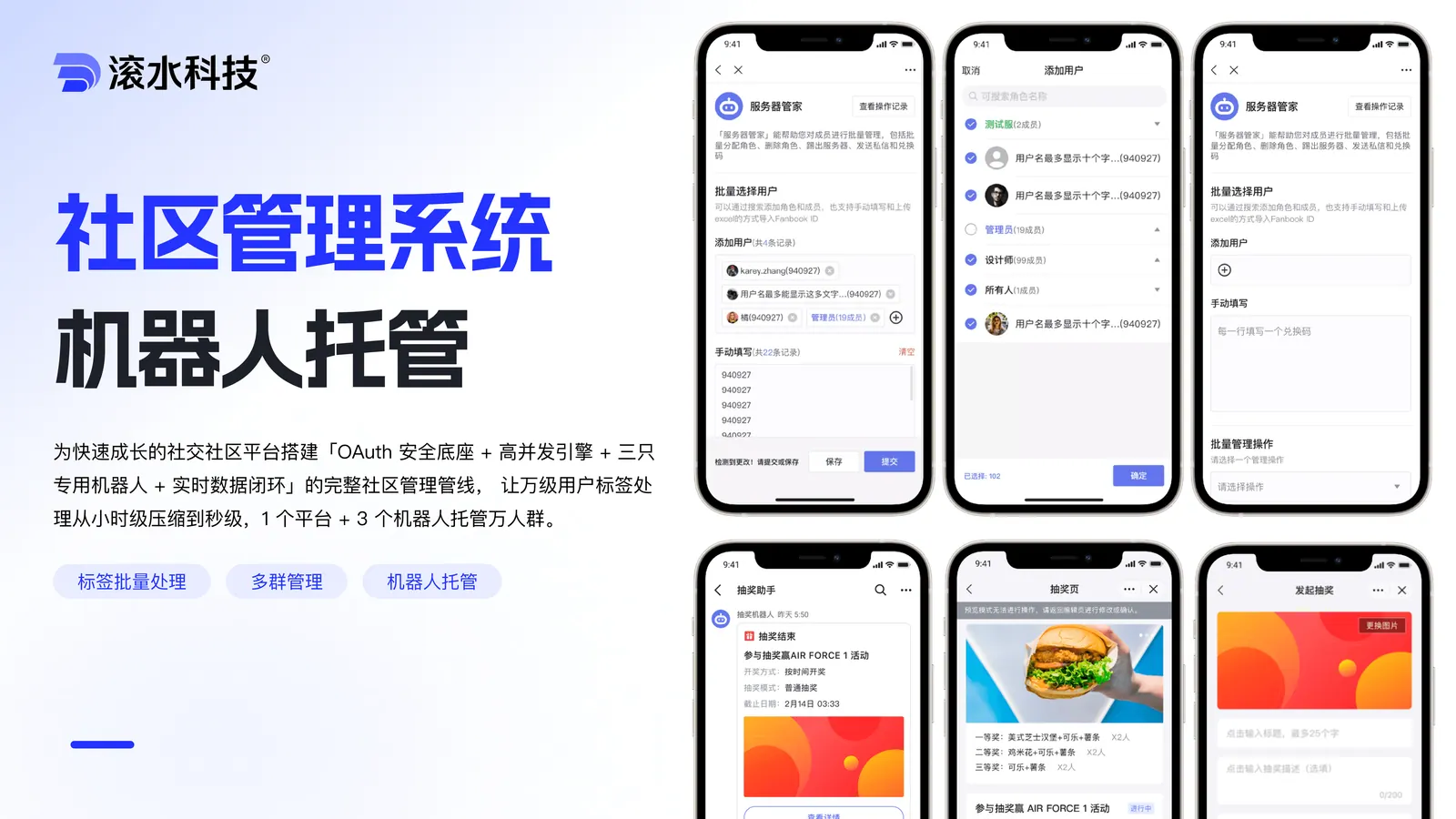
An operations platform for residential and online communities — group management, member workflows and dashboard visualization in one place.
Read the case study
An incubated startup's expert marketplace—from WeChat referrals to verified, billable, arbitratable commerce with trust infrastructure and PC governance.
Read the case studyShare the operating context and the decision you need to make. We’ll help frame the scope, key risks, and a practical next step before you commit to implementation.