Training follows workforce needs
China’s 2025 vocational skills training guidance prioritises demand-led provision and better training and evaluation. It indicates a policy direction; it does not establish a software budget for individual providers.
Build a learning experience around your curriculum, question bank and teaching model. Connect diagnostic quizzes, focused practice and instructor follow-up for adult learners preparing for professional exams.
Professional training providers already have courses, question banks and instructors. The opportunity is to connect those assets into a learning journey with clear next steps and accountable support.
China’s 2025 vocational skills training guidance prioritises demand-led provision and better training and evaluation. It indicates a policy direction; it does not establish a software budget for individual providers.
ExamStar documents daily practice tasks and reporting. Moodle supports question banks, quizzes and conditional access. A quiz engine or score dashboard alone offers limited differentiation.
Area9 combines learner pathways with educator assignments and analytics. Our proposed focus is the connection between an institution’s teaching rules, response evidence and instructor action.
The opportunity to test: one subject, with answers connected to an explained recommendation, instructor approval and fresh-question reassessment. A custom build is justified only where configuration or integration falls short.
A learner’s reason to use the product differs from an instructor’s workload or a provider’s reason to invest. Each needs its own evidence.
One service. Distinct responsibilities.
Learning evidence becomes an instructor’s next action.
Validate whether learners act on recommendations, whether instructors can complete a follow-up from the evidence, and whether the current LMS can already support the same tasks.
Three useful reference routes: an institutional practice platform, an adaptive learning suite and an extensible LMS. Compare their journeys before counting features.
Institutional practice and assessment
Adaptive learning suite
Open-source learning management
Assessment, pathways and analytics already have established implementations. Our proposed differentiation is how a provider combines them with its own teaching service; the value still needs a real pilot.
Compare the fit. Define the difference.
| Dimension | ExamStar | Area9 Rhapsode | Moodle | Proposed approach |
|---|---|---|---|---|
| Product centre | Institutional practice and tests | Adaptive learning | Courses and activities | One-subject support journey |
| Key experience | Assign and practise | Personal paths and educator analytics | Course-based quizzes and feedback | Explained tasks, approval and reviewable reassessment |
| Pathway mechanism | Daily task mode | Personal learning pathways | Conditional activity access | Teaching rules first; evaluate additional algorithms |
| Delivery model | Institutional terms to confirm | Enterprise licensing and implementation to confirm | Self-hosted, cloud or partner | Scoped build/integration; operating services agreed separately |
Connect question versions, explanations and rules to historical answer evidence.
Turn plan approval, question escalation and reassessment into owned tasks.
Extend the current LMS where it makes sense, with clear record ownership.
These are proposed design choices, not claims that competitors lack these capabilities. Commission only the gaps that a same-task configuration and integration trial cannot meet.
Turn your teaching model into an actionable learning service.
AI Personalised Learning & Assessment Platform
For professional exam providers with licensed content and an active teaching team. Connect diagnostics, plans, practice, reassessment and instructor support. The LearnFlow sample uses introductory data analysis to demonstrate the collaboration.
Design principles: interpret limited evidence cautiously, explain recommendations and retain instructor approval. The demo demonstrates a journey; a production pilot must establish educational and operating value.
Start with one responsive web product. Learners can study on mobile browsers; instructors and content teams use desktop workspaces. Add a native app or another channel only when distribution needs justify it.
Understand the starting point
Run entry and progress assessments linked to your learning objectives. Show topic performance alongside question counts, with further assessment where evidence is limited. Give instructors a basis for action without assigning fixed ability labels.
Workflow illustration
Outcome: a reviewable starting point
Consider a learner who needs further percentage practice: the diagnostic informs a plan, the instructor approves it, practice produces evidence and a fresh-question reassessment informs the next decision.
Workflow illustration · no learner records or AI calls are created.
Keep responses with their question versions and topic mappings. The evidence supports a draft, rather than a fixed ability label.
Assess
Keep questions, versions and answers together. Distinguish performance from the amount of evidence available.
Plan
Use prerequisites, learning goals, available time and practice history to organise study.
Practise
Bring explanations and focused practice together, with a clear route to instructor support.
Review
Retest the topic, retain both records and decide whether to revise the plan or arrange support.
Key interactions: explain the recommendation, keep saved drafts out of scores and distinguish repeated questions from fresh evidence. Route disputed content to reviewers while preserving historical versions.
Reports explain what happened. A teaching workspace also shows who will respond, what they did and what happened afterwards.
Create a follow-up from incomplete tasks, errors or learner questions.
Review the answer history and record a support plan.
Use fresh questions after targeted study to collect further evidence.
Agree the next tasks and keep the intervention history.
Request further responses or instructor review before drawing conclusions.
Let content authors publish a revision while preserving historical versions.
Offer approved material and instructor support. Keep scoring independent.
Your institution maintains content, answer keys and teaching rules. Keep sources and review points with assisted outputs, and let instructors retain responsibility for plans and follow-up.
Use rules for deterministic decisions and AI where language assistance adds value. People remain responsible for activating plans, publishing content and closing support tasks.
Routing illustration · switches show the planned workflow, not a live model response.
Retrieve the relevant explanation, draft help with its reference, and keep a route to instructor review.
Always independent: objective scoring, study plan approval and professional certification.
The current question, topic, licensed explanation and relevant learning context, limited to what the task needs.
Answer-key scoring, task completion, evidence counts and state transitions need no language model.
Explanations, error-review summaries and instructor drafts; assess correction effort, time and cost on licensed samples.
Approve plans, resolve disputes, publish revisions and close interventions. Autonomous agents are unnecessary for the first release.
The demo uses preset AI replies. Production models and retrieval require separate correctness, latency, cost and fallback evaluation.
Define boundaries around existing systems and record ownership. Production needs server-side persistence, permissions and recovery; browser storage in the demo exists to explore the journey.
Responsive UI → identity and permissions API
Learners see their own records; instructors have cohort access; content roles have publication rights. Enforce tenant boundaries on the server.
Learning services → transactional database / file storage
Link question versions, attempt batches, plans and interventions. Handle duplicate submissions and audit significant state changes.
Controlled retrieval → model gateway → output checks
Keep credentials server-side and apply usage limits. Model failure must not interrupt scoring or approved tasks.
Identity / LMS / content → API or reviewed import
Confirm fields, rights and record ownership. Test backups, restoration, monitoring and release rollback before launch.
Question version → response → evidence → plan version → task → reassessment / intervention
Choose a managed or dedicated environment around the customer’s infrastructure and agreement. Confirm interfaces, retention, export access and support responsibilities before the pilot. Production identity, third-party APIs and models are not connected to this demo.
Begin with adult exam theory, then extend by question format, assessment method and support model. Each setting needs its own content and acceptance tests.
Assign topic practice after a diagnostic, follow up on repeated errors and review fresh-question performance before an exam.
Judge the investment first by whether the teaching service can run clearly, then by measurable operating outcomes. The institution owns the content and service relationship; software connects the work.
The demo links answers, tasks, reassessment and intervention records. This demonstrates a workflow, not an educational outcome.
Shared context may reduce repeated preparation and missed handovers. Compare handling time, omissions and instructor workload with current tools.
Renewal, learner experience, exam performance and acquisition effects require actual data. No ROI, revenue uplift or savings percentage has been established.
Complete one subject and one end-to-end journey before expanding. Scope, schedule and cost depend on content, interfaces and evaluation samples.
First release: one adult exam subject, reviewed questions, topic mappings, diagnostics, instructor-approved plans, practice, fresh-question reassessment, support records, content versions and basic permissions. Start with approved explanations; connect a model after sample evaluation.
Confirm content rights, topic structure, explanation quality and the learner-to-instructor journey.
Specify assessment evidence, task assignment, approval and exceptions. Check the rules against sample scenarios.
Choose mobile web, an existing app or another suitable channel. Validate identity, learning records and assisted explanations.
Use task completion, intervention outcomes, follow-up results and operating costs to guide the next release.
Agreed workflows, roles, data definitions, interfaces and business services; source and deployment configuration as contracted.
Import specification, content review and version rules, field mappings and integration test records.
Workflow and permission tests, AI sample evaluation, user guidance, training, backup and monitoring documentation.
Dependencies: licensed material, curriculum reviewers, a pilot cohort, identity/LMS access and model service terms. Reduce the pilot scope when a critical dependency is unavailable.
Review content revisions, task completion, intervention closure, reassessment evidence and service cost. Reassess content, permissions and models before adding subjects, subjective tasks or channels.
Sources reviewed: 3 November 2026
Start with your teaching service. A question bank may be enough for quizzes, practice and score exports. A broader platform becomes relevant when assessment, task planning, reassessment and instructor support need to operate together. Existing systems may only need configuration or integration.
Professional exam workflows can be built around the relevant syllabus and question formats. Practical competence requires additional evidence, such as work samples, observation and assessor review. Essays, speaking and other subjective tasks need their own scoring and review design.
Confirm rights to questions and explanations, topic mappings, teaching objectives, scoring and assignment rules, instructor processes and available integrations. One subject and a reviewed sample set are enough to begin scoping a pilot.
Objective questions use defined answer keys. Recommendations consider response evidence and teaching rules, while AI assists with explanations and summaries. Limited evidence requires further assessment or review. The platform does not certify professional competence or guarantee exam outcomes.
The demo uses original sample questions and fictional learners to show assessment, plans, practice, reassessment, instructor follow-up and content revision. AI replies are preset simulations and data stays in the current browser. Production identity, licensed content, models and integrations are scoped separately.
Assess the identity, course, question and response interfaces first. Keep ownership of core records clear and retain the responsibilities of existing systems. A reviewed import-and-export workflow can support an initial pilot where interfaces are unavailable.
Tell us about your learners, content and instructor service. Together we’ll define the learning journey, integrations and acceptance criteria.
Related solutions
AI, capital-markets docs, OCR, vision, IoT and membership operations — composable for your industry.
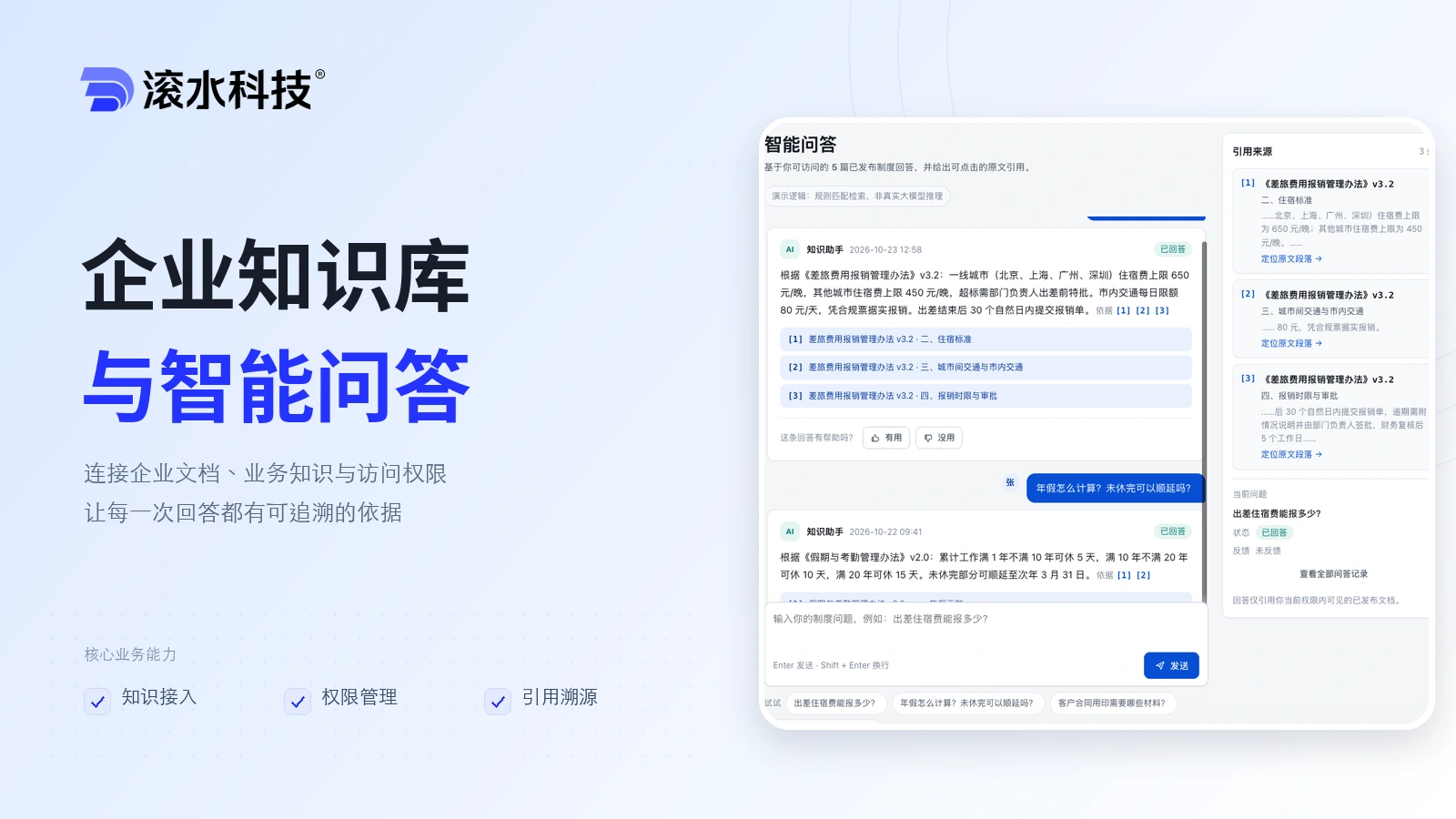
Connect enterprise documents and business knowledge with source citations and access controls. Start with a model API, or deploy processing, retrieval, and inference on an appliance for fully internal use.
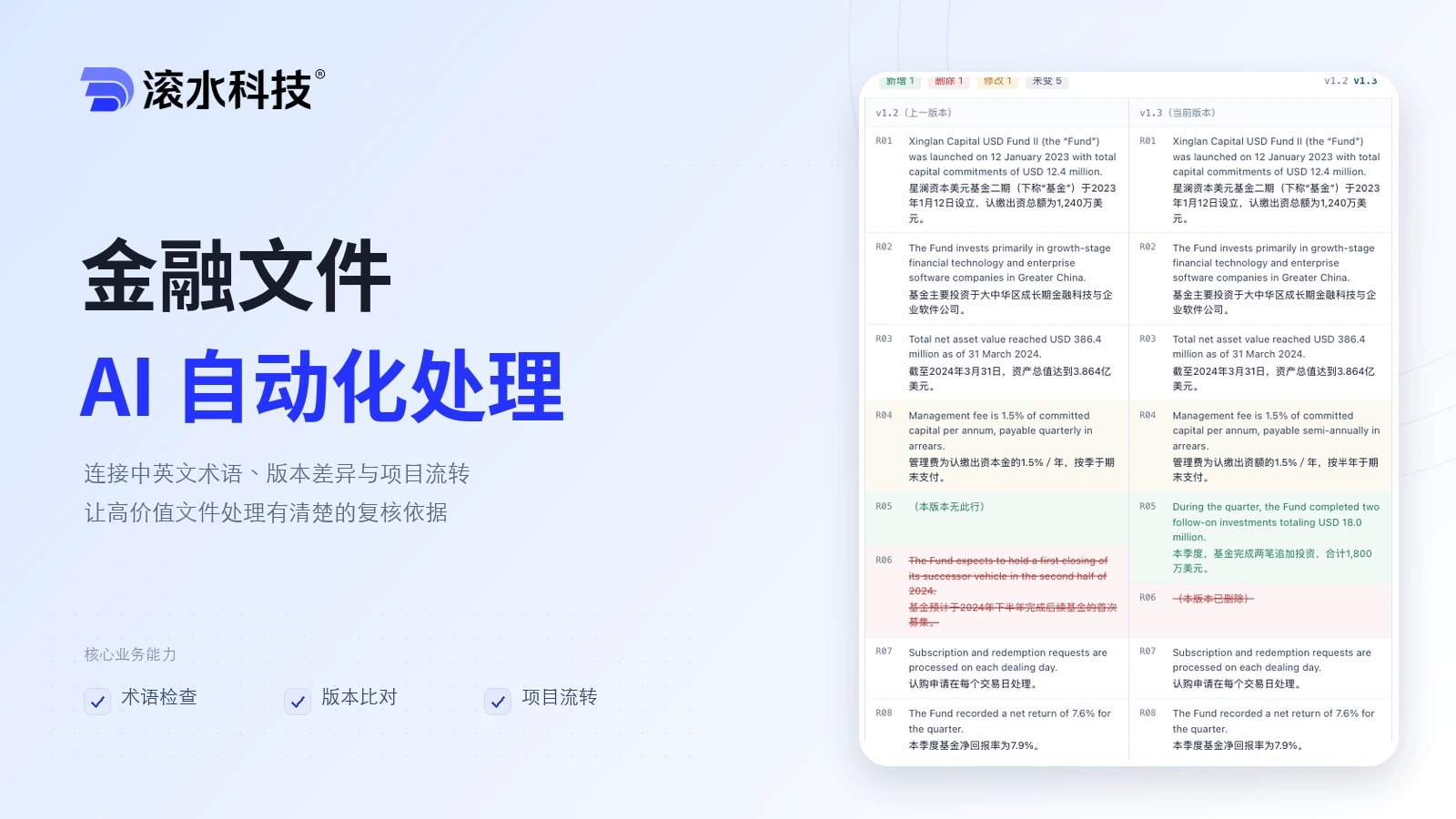
Connect terminology checks, version comparisons, human review and project handoffs for bilingual financial documents, with traceable decisions and review records.
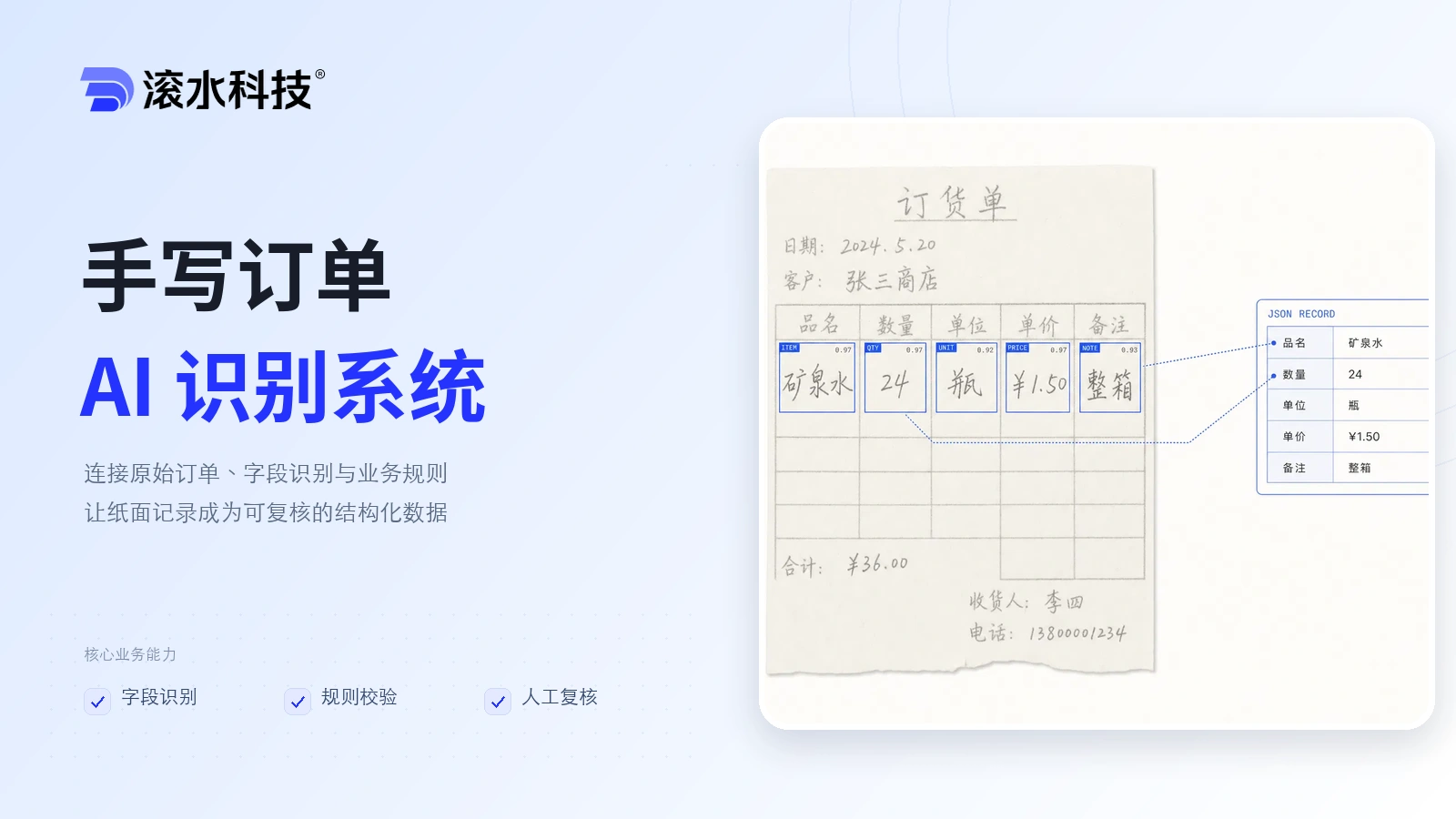
Turn handwritten orders into structured records through field extraction, validation, and human review, ready for integration with your order management workflow.